

The Last Lecture
On brick walls, borrowed time, and choosing to be a Tigger

Recently, one of my friends became cancer-stricken.
He is quite young, in his early 50s.
News of his illness hit me like a lightning bolt. I never thought it would happen to him, or to anyone close to me, really.
I debated with myself over how I could support him. In the end, I simply chose to visit him at his home with some simple fruits and snacks – a small, inadequate gesture, but the best I had.
Over the ensuing few months, I always wanted to ask how he was doing when I met him. However, my tongue felt tied. I did not know what to say. So in the end, we chose to pretend that nothing consequential was happening, and just carried on with our usual conversations.
I suppose this is a “cop out” on my part. But I feel that there is a limit to what I can do. Ultimately, it is his own battle to fight.
The Last Lecture
When you are faced with a critical illness like cancer, how would you respond?
My friend’s experience brought to mind The Last Lecture by Randy Pausch.
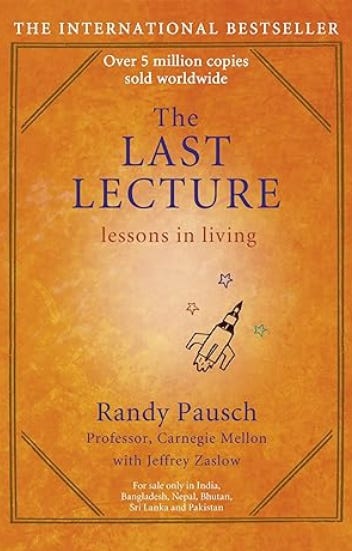
Randy Pausch was a Carnegie Mellon University computer science professor who was diagnosed with pancreatic cancer in September 2006, at the age of 46, not unlike my friend.
At Carnegie Mellon, when a professor is leaving or retiring, they are encouraged to give a “last lecture”, a hypothetical final talk where top academics are asked to think deeply about what matters most to them. The premise is simple: what wisdom would you try to impart to the world if you knew it was your last chance?”
In Randy’s case, it was not hypothetical at all.
Randy’s lecture was amazing. You can watch his lecture on youtube here (it has garnered 20 million viewers), 18 years after he passed away.
I would strongly encourage you to do so, especially the first 10 minutes. You will be blown away by his positivity and humour, despite everything he was facing. A full transcript is also available here if you prefer to read.
Legacy in a Bottle
After giving his last lecture, people were eager to know about Pausch’s life experiences. He worked with journalist Jeffrey Zaslow to expand the youtube video into a book, distilling the wisdom and life lessons that mattered to him.
This was actually how I got to know his story. Through the book and not the youtube video.
Randy clearly knew his time was limited. And he was determined to leave something behind.
And what a legacy it is. Even 18 years after his death, his words of wisdom (his fans call them Pauschisms) still come to me from time to time.
Below are five that resonated most deeply with me.
#1. Brick Walls are There for a Reason
One of Randy’s childhood dreams was to become a Disney Imagineer. He bided his time, earned a PhD from Carnegie Mellon, and assumed that made him qualified for just about anything.
Lo and behold, he received what he described as the “damned nicest go-to-hell letters he has ever gotten.”
Years later, Randy had not forgotten that dream. He eventually found his way into a project with Disney, but the path was littered with obstacles: the secretive nature of Imagineering, academic bureaucracy, and a culture clash as a “wonky” academic trying to fit into a “rough-and-tumble” creative world.
This was when he articulated one of his most memorable Pauschisms:
“The brick walls are there for a reason. They’re not there to keep us out. The brick walls are there to give us a chance to show how badly we want something … The brick walls are there to stop the people who don’t want it badly enough. They’re there to stop the other people.”
I have reminded myself of this Pauschism from time to time. It helps me reframe my thinking when life gets hard, and my dreams and aspirations feel further and further away. I will sometimes really visualise a brick wall, and tell myself that I need to learn how to get over it.
#2. Bring Something to the Table
Another of Randy’s childhood dream was to float in zero gravity.
Decades later, a team of his Carnegie Mellon students won a NASA competition to conduct a virtual reality experiment aboard the “Vomit Comet,” a plane used to train astronauts by flying in parabolic arcs to create 25-second bursts of weightlessness.
Randy was ecstatic. Then he hit a brick wall.
Under NASA’s rules, under no circumstances were faculty advisors allowed to fly with the teams under any circumstances. Heartbroken but undeterred, Randy scoured the programme’s literature for an opening. He found one: NASA allowed one local media journalist to accompany each team. He immediately faxed two documents to NASA — his resignation as faculty advisor, and his application as a “web journalist.”
The NASA official on the other end was sceptical, calling his plan “a little transparent.” But this was where Randy showed his genius. Rather than simply pleading for an exception, he offered a deal: he would use his expertise to generate online coverage of their experiment and provide high-quality footage that other journalists could use. He made himself useful.
NASA accepted. Randy floated.
I really love this story. Firstly, the sheer audacity of it makes me smile. Second, it is a masterclass in how to scale a brick wall. Sometimes, it is not just about sheer grit and persistence. If you want to achieve something badly, you have to think outside the box and find more creative ways to achieve it.
#3. Choose to be a Tigger
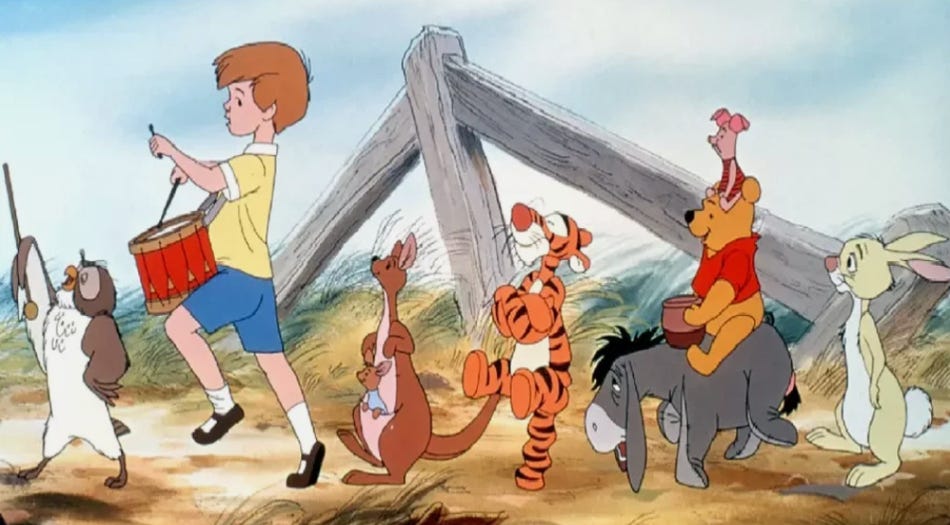
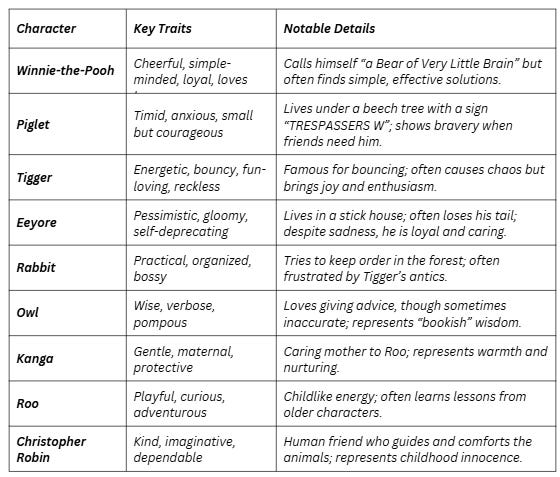
For Randy Pausch, life ultimately came down to a single, defining choice: are you a Tigger or an Eeyore?
Randy was firmly in the Tigger camp. He believed that the key to a fulfilling life was never losing your childlike sense of wonder. And he lived by it, even after his diagnosis. He often said he simply didn’t know how not to have fun. To him, maximising joy was not a side effect of a good life. It was the goal.
He illustrated this through the way he spent his final months. For his last Halloween, the whole family dressed as The Incredibles. Randy wore a suit with giant, fake cartoon muscles and sent photos to friends, proof that while his body was failing, his “superpowers” were still very much intact.
In his final months, he also took a scuba-diving trip with three of his oldest friends. They were all Tiggers. They made a pact, unspoken perhaps, to avoid solemn “I love you, man” conversations. Instead, these grown men spent the weekend making fun of each other like thirteen-year-olds.
This is one story that makes me truly admire the man. Even on an ordinary day, in my perfectly happy and healthy life, I catch myself being Eeyore. I lament and complain, and sometimes spiral into self-defeating negative thoughts. And here was a man, months from death, choosing joy. Choosing to bounce.
He reminds us that this is always a choice. So — which Winnie-the-Pooh character do you want to be?
#4. Play the Hand You’re Dealt
“We cannot change the cards we are dealt, just how we play the hand”.
This is perhaps Randy’s most famous Pauschism. It is not a new idea. But when it comes from a man with terminal cancer and only months to live, it stops being a platitude and becomes something you feel in your chest.
He played his hand fully. A book. A YouTube video still being watched nearly two decades later. And countless lives quietly changed by his words. He was a professor to the very end, teaching as best he could, for as long as he could.
#5. Time is Your Only Commodity
Randy believed that time is the only resource that truly matters, because, unlike money, it is finite and cannot be recovered. He argued that most of us waste it simply because we don’t manage it with the same intentionality we apply to our finances.
Again, not a new idea. But when it comes from someone with only months of good health remaining, it cuts differently.
He offered practical suggestions: turn off email notifications, for instance, so that you check them on your terms rather than reacting like “Pavlov’s dog.”
[As I write this, I just turned off my Substack app notifications, because I, too, have been reacting like Pavlov’s dog. Maybe fellow Substackers should do the same!]
A Parting Thought
Writing this article has been quietly meaningful for me. It gave me a chance to sit with Randy’s philosophies and ask honestly how well I am living up to them.
We all have our own beliefs about how life should be lived. The harder question is whether our thoughts, words, and actions actually reflect them.
I hope that if a critical illness ever does befall me (touch wood!) I can face it the way Randy did. With courage, with generosity, and with enough Tigger energy to leave something worthwhile behind.
And I sincerely hope that my friend, who is, at heart, more Tigger than Eeyore, will pull through, and have many more years to write his own legacy.
Brinny is a mid-lifer and a mum, writing from inside a demanding corporate career and a full life in Singapore. The Uncommon Chapter is a reader-supported publication, and your subscription gives me the strength to keep making it, week after week. If you haven’t already, would you consider subscribing?
> I did not know what to say. So in the end, we chose to pretend that nothing consequential was happening, and just carried on with our usual conversations.
As someone who recently went through surgery, this is exact kind of thing that would comfort me after a hysterectomy. My friends took me out for lunch and a movie, we talked about everything but my health. A moment or two of normalcy is definitely what we need at a time like these so you did more than you think! Don't discount that 🥰